Back to Top
Apply Giving myAugusta
Resources for:
Students
Students Faculty & Staff Parents & Family Alumni Community
Augusta University Logo
  • Academics
    A group of men and one woman stand in front of a screen and hold awards
    18 Computer and Cyber Sciences students receive Rattner Scholarships »

    Academics Home

    Colleges & Schools

    Programs of Study
    • Degrees & Programs
    • Course Catalog
    • Course Schedule
    • Program Pathways
    • Academic Calendar
    • Online Programs
    • Accelerated Degree Programs
    Resources
    • Academic Success Center
    • Advising
    • Counseling Services
    • Honors Program
    • Libraries
    • Testing & Disability Services
    • Writing Center
    Outside the Classroom
    • Army ROTC
    • Study Abroad
    • Experiential Learning
    • First Year Experience
    • Center for Undergraduate Research
    • Career Services
    • Jags Live Well
  • Admissions
    Georgia Gov. Brian P. Kemp sitting next to First Lady Marty Kemp signing the state’s amended FY2026 budget.
    DREAMS Scholarship becomes a reality in Georgia »

    Admissions Home

    Visit Campus

    Request Information

    Apply to AU
    • First-Year Freshmen
    • Transfer Students
    • Dual Enrollment
    • Graduate Students
    • Medical College of Georgia
    • Dental College of Georgia
    Opportunities
    • Degree & Programs
    • Honors Program
    • Program Pathways
    • Military-Affiliated Students
    • New Student & Family Transitions
    • On-Campus Housing
    Financial Aid
    • Student Financial Aid
    • Net Price Calculator
    • Scholarships
    • Cost of Attendance
    • Apply for Federal Aid
  • Campus Life
    The Dr. Gretchen B. Caughman Student Welcome Center highlighted the new Office of Undergraduate Admissions hub while honoring Provost Emerita Gretchen B. Caughman’s legacy, bringing together campus leadership and student ambassadors in a space designed to welcome future Jaguars.
    AU unveils Dr. Gretchen B. Caughman Student Welcome Center »

    Campus Life Home

    Athletics

    Community
    • Army ROTC
    • Living-Learning Communities
    • Military & Veteran Services
    • Mentorship
    • New Student & Family Transistions
    • Jags 4 Jags Mentoring Program
    Campus Services
    • Dining Services
    • Roarstore
    • Housing
    • Student Health
    • Parking & Transportation
    • Jagcard
    Get Involved
    • Clubs & Organizations
    • Greek Life
    • Campus Recreation
    • Student Government
    • Jaguar Production Crew
    • Intramural Sports
  • Research
    The Anthony Grinnell Foundation makes a donation to the Wellstar MCG Health Adrenal Center during a ceremony at the Georgia Cancer Center on the Augusta University Health Sciences campus
    Family creates memorial fund to support research into rare cancer »

    Research Home

    Opportunities
    • Undergraduate Research
    • Graduate & Postdoctoral Research
    • Clinical Trials
    • Core Laboratories
    • Innovation Commercialization
    Initiatives
    • Cancer
    • Cardiovascular
    • Immunology
    • Neuroscience
    • Aging
    Resources
    • Centers & Institutes
    • Ethics & Compliance
    • Institutional Review Board
    • Sponsored Programs
    • Tools for Researchers
  • About AU
    Vice President of Government Relations Margie Miller, Government Relations intern Noah Ceyssens, Director of State Government Relations Ashton Blackwood Paine, Augustus, Assistant Director of State Government Relations Luke Ray and Director of Federal Relations Monty Philpot Brock.
    Augusta University enjoys a successful 2026 legislative session »

    About AU

    Jagwire News

    Leadership
    • President
    • Provost
    • Administration
    • Enrollment Student Affairs
    • Faculty Senate
    We are AU!
    • Our Mission
    • Working at AU
    • Traditions
    • History
    • Augusta, GA
    Resources
    • MyAugusta
    • Calendar of Events
    • Brand Guidelines
    • Portals
    • Faculty Directory
Resources For
  • Current Students
  • Faculty & Staff
  • Parents & Family
  • Alumni & Friends
Apply
Giving
MyAugusta
Trending Search Terms
  • D2L LMS
  • Email
  • Pounce
  • Calendar
  • Registrar
  • Housing
  • Academic Calendar
  • Financial Aid
  • Parking
  • Library
  • Human Resources
  • Information Technology
PPG Members
PPG
  • Welcome
  • About
    • Project 1
    • Project 2
    • Project 3
    • Core A
    • Core B
    • Core C
  • Impact
    • Publications & Abstracts
  • Our People
    • Project 1
    • Project 2
    • Project 3
    • Core A
    • Core B
    • Core C
    • PPG Advisory Board
    • PPG External Advisory Board
  • Augusta University
  • Colleges & Schools
  • Medical College of Georgia
  • PPG

PPG - Endothelial Metabolism & Redox Imbalance in Vascular Disease
 

Augusta University VBC Logo


Program Director: Dr. Tohru Fukai
Co-Director: Dr. Masuko Ushio-Fukai
Institution: Vascular Biology Center, Medical College of Georgia at Augusta University

Overall

Redox imbalance between reactive oxygen species (ROS) and reactive nitrogen species (RNS) (high ROS and low nitric oxide) is a fundamental mechanism of endothelial cell (EC) dysfunction contributing to the vascular inflammatory and metabolic diseases such as atherosclerosis, diabetes, and peripheral arterial disease. Evidence suggests that EC metabolism and ROS are intimately connected and involved in vascular disease. The current studies will identify key mechanisms dictating the interplay of metabolism with ROS/NO and how this impacts endothelial function, which will lead to new therapeutic strategies.

Jump to: Intended ImpactCentral Overall HypothesisSynergy & Integration OverallProjectsCores

Intended impact

We propose three highly integrated projects that will focus on the diverse mechanisms by which vascular risk factors perturb key ROS/metabolic pathways to promote vascular disease. 

Central Overall Hypothesis

Imbalance between changes in EC metabolism and ROS/RNS (redox balance), induced by various risk factors, drives EC dysfunction and the development of vascular disease

Synergy & Integration Overall

Addressing the interplay between endothelial metabolism and oxidative stress is complex and involves multiple interrelated systems and thus is an ideal match for the enhanced scope of a program project.

We will investigate the key pathways unique to each project using different mouse models and cell-based approaches through the sharing of mice, tissues, and reagents and coordinated services across the 2 scientific cores.

Our highly accomplished experimental team has an established track record of interactions, productivity, and collaborations in the area of endothelial biology, ROS/NO, and EC metabolism.
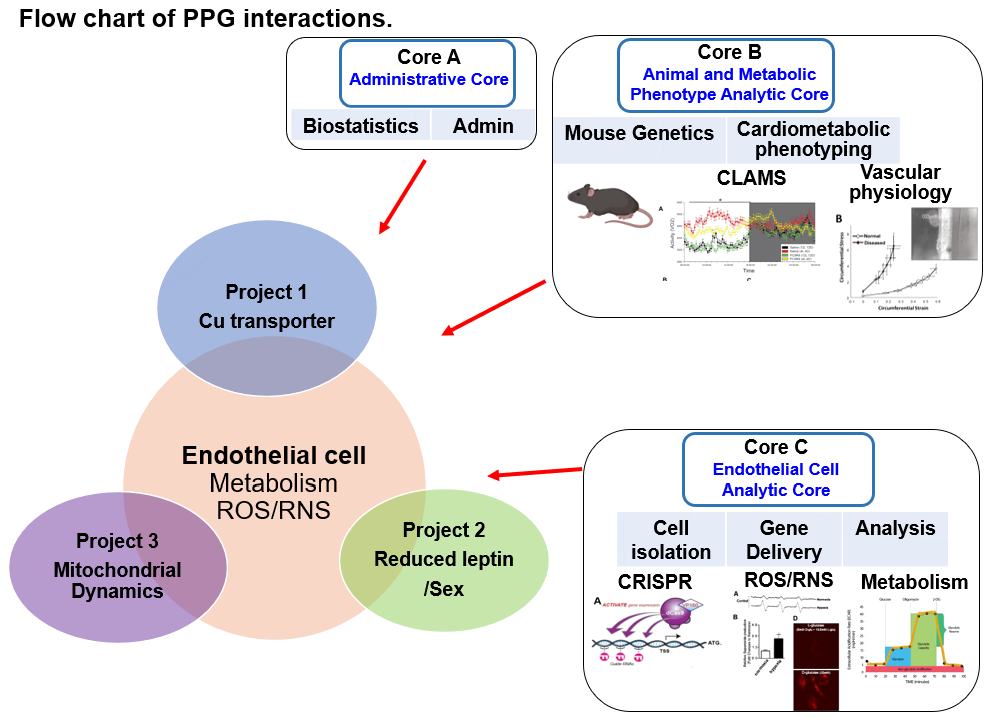
 Graphic of a Flow chart of PPG interactions from the different Cores & Projects. Core A (Administrative Core) Biotastics & Admin. Core B (Animal and Metabolic phenotype analytic core). Core C - endothelial cell analytic core (with cell isolation, gene delivery, analysis, CRISPR, POS/RNS, and metabolism), making up Core C. All of the Cores have separate arrows pointing to the different projects. Project 1 (CU transporter), Project 2 ( Reduced leptin/sex), and Project 3 (Mitochondrial dynamics), which are all components of Endothelial cell (metabolism/ROS/RNS).

Projects

Program Directors: Dr. Tohru Fukai (Contact PD/PI) who has expertise in oxidative stress and vascular disease and Dr. Masuko Ushio-Fukai (PD/PI) who has expertise in redox signaling and endothelial cell (EC) biology

Project—1

Project—2

Project—3
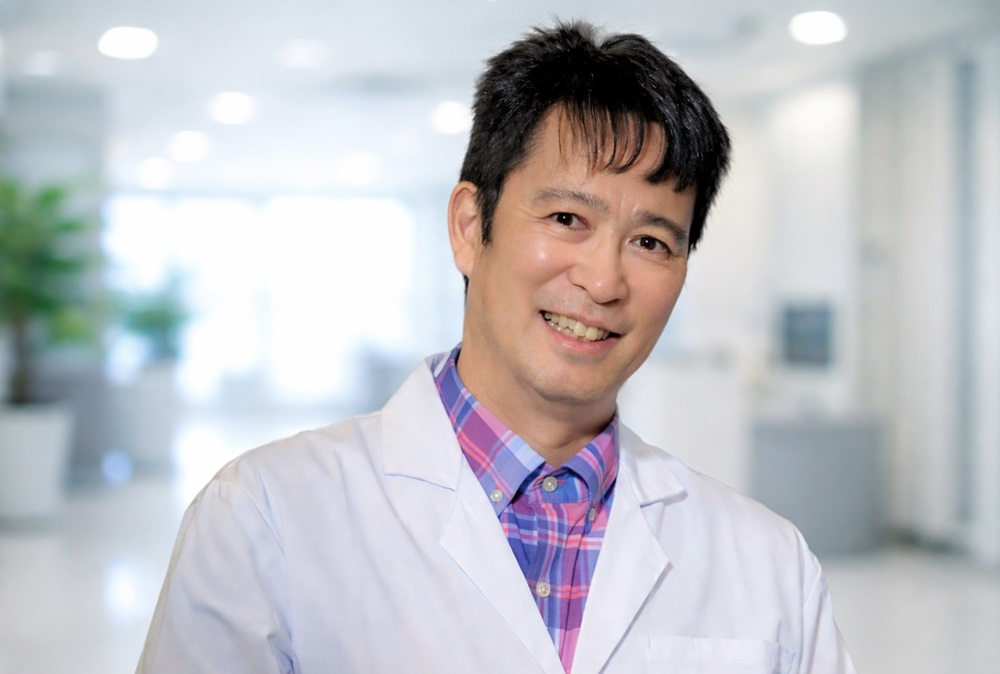
Drs. Tohru Fukai and Ushio Masuko-Fukai in a lab

Project Leader: Dr. Tohru Fukai

Project Leader: Dr. Tohru Fukai
Dr. Eric Belin de Chantemele

Project leader: Dr. Eric Belin de Chantemele

Project leader: Dr. Eric Belin de Chantemele
Dr. Masuko Ushio-Fukai in Lab

Project leader: Dr. Masuko Ushio-Fukai

Project leader: Dr. Masuko Ushio-Fukai

Role of Cu Transporter in EC Metabolism, ROS, & Atherosclerosis

Hypothesis: ATP7A dysfunction in inflamed endothelial cells disrupts copper (Cu) metabolism, causing intracellular Cu accumulation that promotes endothelial-to-mesenchymal transition (EndMT) through PFKFB3-driven glycolysis and mitoROS-mediated activation of TGF-β signaling.
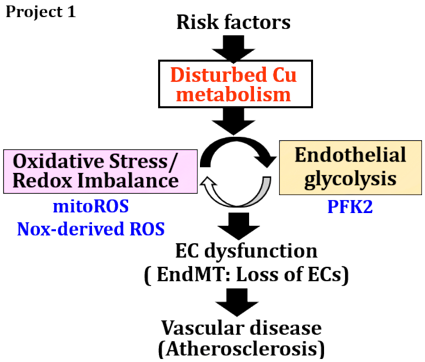
Project 1 figure as described on the page under the figure.

The figure describes how the disturbed Cu metabolism induced by risk factors promotes endothelial dysfunction (EndMT) via excess ROS and glycolysis, driving atherosclerosis.

Sex & Leptin control of endothelial cell glycolysis & redox balance in Type 1 diabetes

Hypothesis: Endothelial cell (EC) metabolism regulates endothelial function in type 1 diabetes through sex-specific, leptin-dependent mechanisms involving PFKFB3- driven glycolysis & NOX1-mediated oxidative stress.

Project 2 figure as described on the page under the figure.

The figure shows that Type 1 Diabetes, through reduction in leptin and male and female sex steroid hormones, promotes endothelial dysfunction and vascular disease via redox imbalance and impaired endothelial cell glycolysis.

Mitochondrial dynamics protein Drp1 regulation of endothelial metabolism, ROS, & ischemic vascular disease

Hypothesis: VEGF/NOX-derived H₂O₂ regulates endothelial metabolism and angiogenesis through Drp1-mediated mitochondrial fission and AMPK/PFKFB3-driven glycolysis, but in diabetes, this pathway becomes dysregulated.
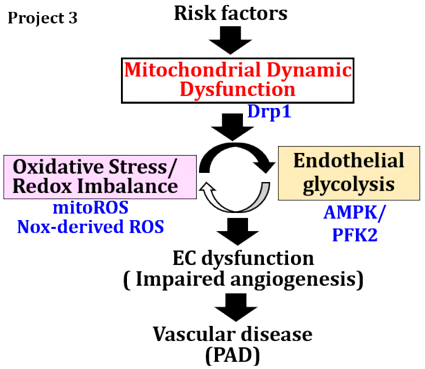
Project 3 figure as described on the page under the figure.

The figure shows Mitochondrial Drp1 integrates redox signaling with glycolysis through cysteine oxidation-mediated AMPK/PFKFB3 activation, driving angiogenesis, which is impaired in diabetes, leading to PAD.

Cores

Drs. Tohru Fukai and Ushio Masuko-Fukai in a lab
Learn More

Core A —Administrative Core

Core A will coordinate & oversee the research efforts of the individual projects to maximize project synergy and ensure administrative and regulatory compliance.

Core A —Administrative Core
David Stepp poses in his lab
Learn More

Core B — Animal & Metabolic Phenotype Analytic Core

This core will provide support for all projects with novel knockout or transgenic mice with endothelial gene alterations and in vivo metabolic measurements.
Core B — Animal & Metabolic Phenotype Analytic Core
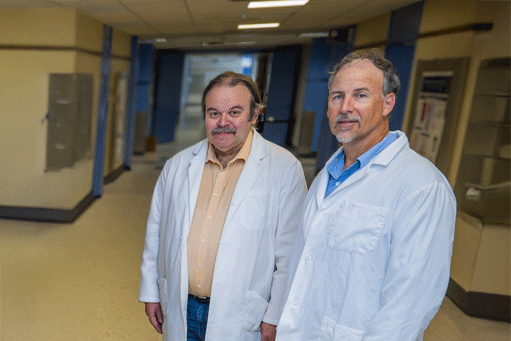
Drs. Lucas & Fulton
Learn More

Core C — Endothelial Cell Analytic Core

This core will assist with isolation and characterization of primary endothelial cells from genetically modified mice and rigorous viral, CRIPSR/Cas9-mediated genetic manipulation of endothelial cells.

Core C — Endothelial Cell Analytic Core

Great Doctors, Great Medicine Since 1828. 

University Shield

Augusta University

1120 15th Street, Augusta, GA 30912

  •   Campus Maps
  •   Campus Contacts
  • A-Z Directory
  • Degrees & Programs
  • Employment
  • Accessibility
  • Accreditation
  • Campus Safety
  • Compliance Hotline
  • Human Trafficking Notice
  • Privacy Notices
  • Title IX / Sexual Misconduct
Apply Now Give Now

© 2026 Augusta University

Augusta University Facebook Augusta University Twitter Augusta University LinkedIn Augusta University Youtube Augusta University Instagram
©