Passive (or Inhibitory) Avoidance
Description
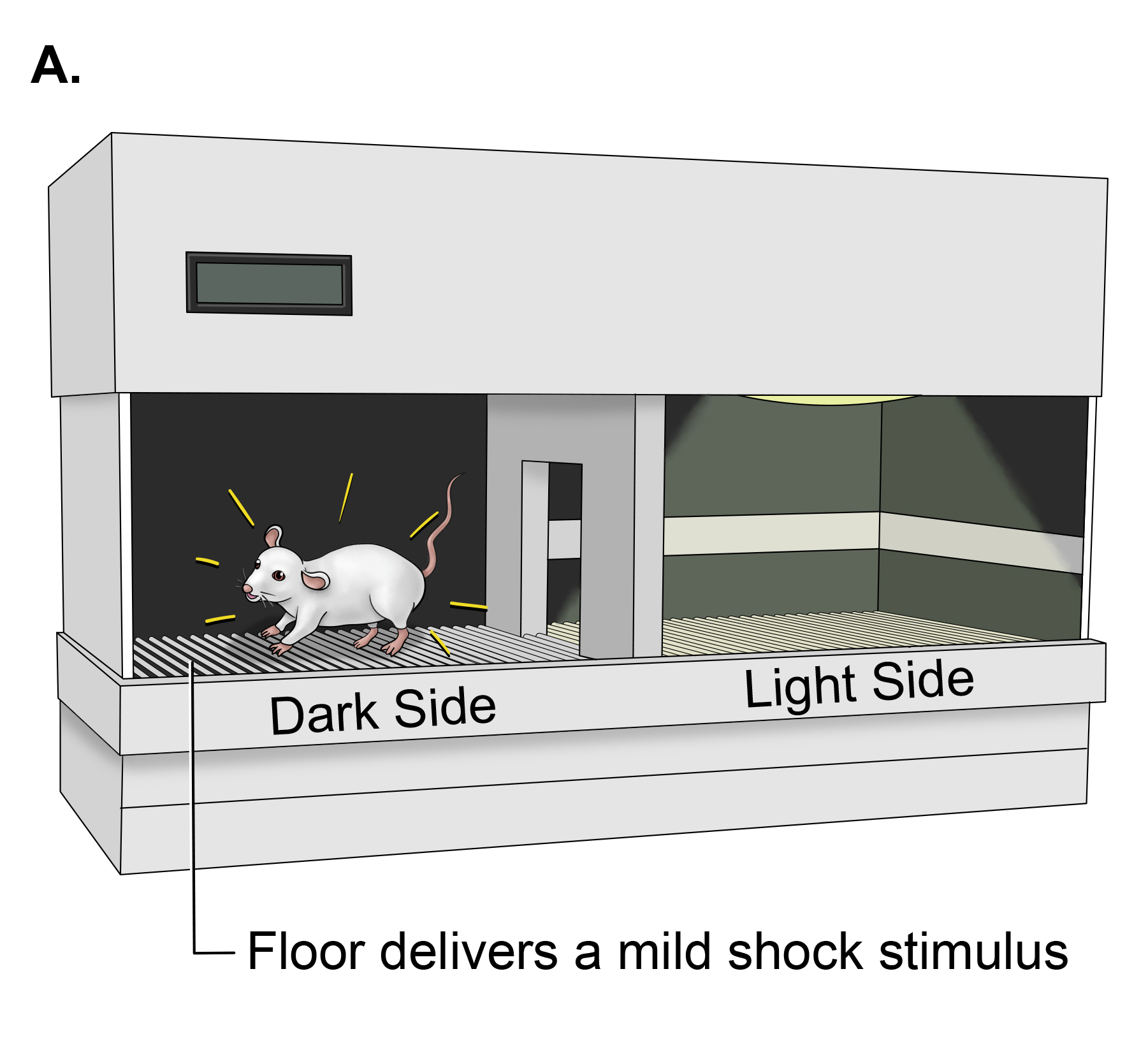
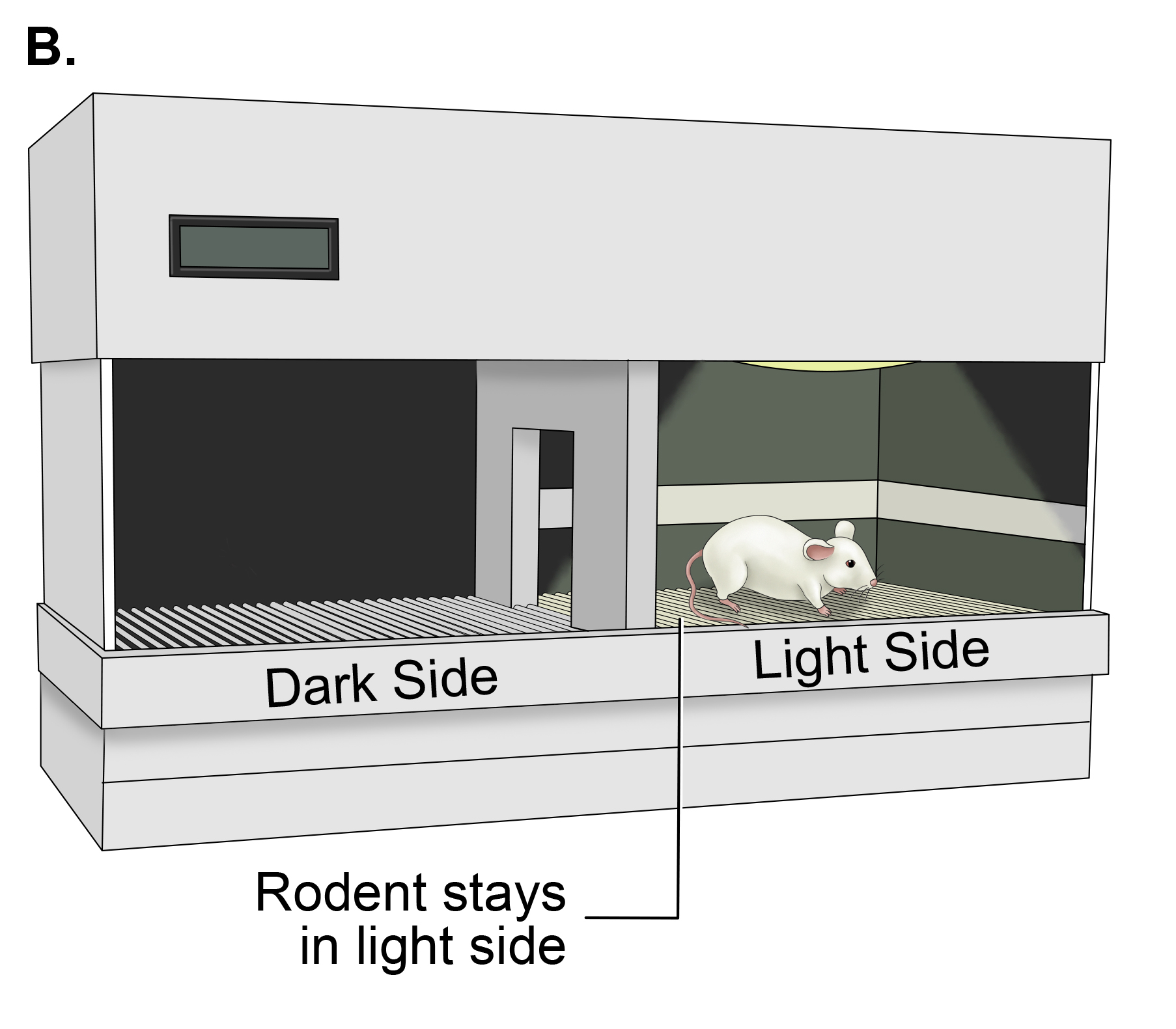
In the Passive (Inhibitory) Avoidance test the subjects learn to avoid a mild aversive stimulus (e.g., foot shock) by remaining in the lighted side of a two-compartment chamber and not entering the dark (unsafe) side. Technicians record the step-through latency (i.e., number of seconds elapsed before subjects cross into the unsafe side of the chamber), as well as the percentage of animals from each test group that crosses the threshold within the allowed cutoff time (e.g., 300 sec).
Purpose
This test is a quick, simple method of assessing the effects of age, genetic models, or drugs on associative learning and memory retention.